Recover Your Funds From Bitcoin, Forex, Binary, and Crypto Brokers. We Specialize in Cases Over $5000. Their experts are ready to help with tracing your lost funds and guide you toward recovery
Deltafx Review: Is it a Legit Broker or a Sophisticated Scam?
In the rapidly evolving world of online trading, discerning the difference between a legitimate financial platform and a sophisticated fraudulent operation is more critical than ever. Investors are constantly searching for platforms that offer high returns, low spreads, and a user-friendly interface. One name that has frequently surfaced in digital trading circles is Deltafx. As a cyber-security analyst and SEO content specialist, I have conducted an exhaustive investigation into this platform to answer the primary question: Is Deltafx a scam or legit? This comprehensive review will dissect the platform’s operations, regulatory status, and technical infrastructure to provide a definitive verdict for potential investors.
The allure of the foreign exchange market, or Forex, often attracts individuals looking for quick financial gains. Deltafx positions itself as a premier brokerage offering access to various financial instruments, including currency pairs, commodities, and indices. However, beneath the polished surface of its marketing materials lies a series of concerns that require a professional deep dive. When evaluating the legitimacy of an online broker, we must look beyond the aesthetic of the website and scrutinize the underlying data, legal compliance, and security protocols.
Regulatory Status and Legal Compliance
The single most important factor in determining the legitimacy of any financial service provider is its regulatory status. Legitimate brokers are required to be registered with and overseen by reputable financial authorities such as the Financial Conduct Authority (FCA) in the United Kingdom, the Australian Securities and Investments Commission (ASIC), or the Securities and Exchange Commission (SEC) in the United States. These bodies enforce strict rules regarding capital requirements, the segregation of client funds, and transparent reporting.
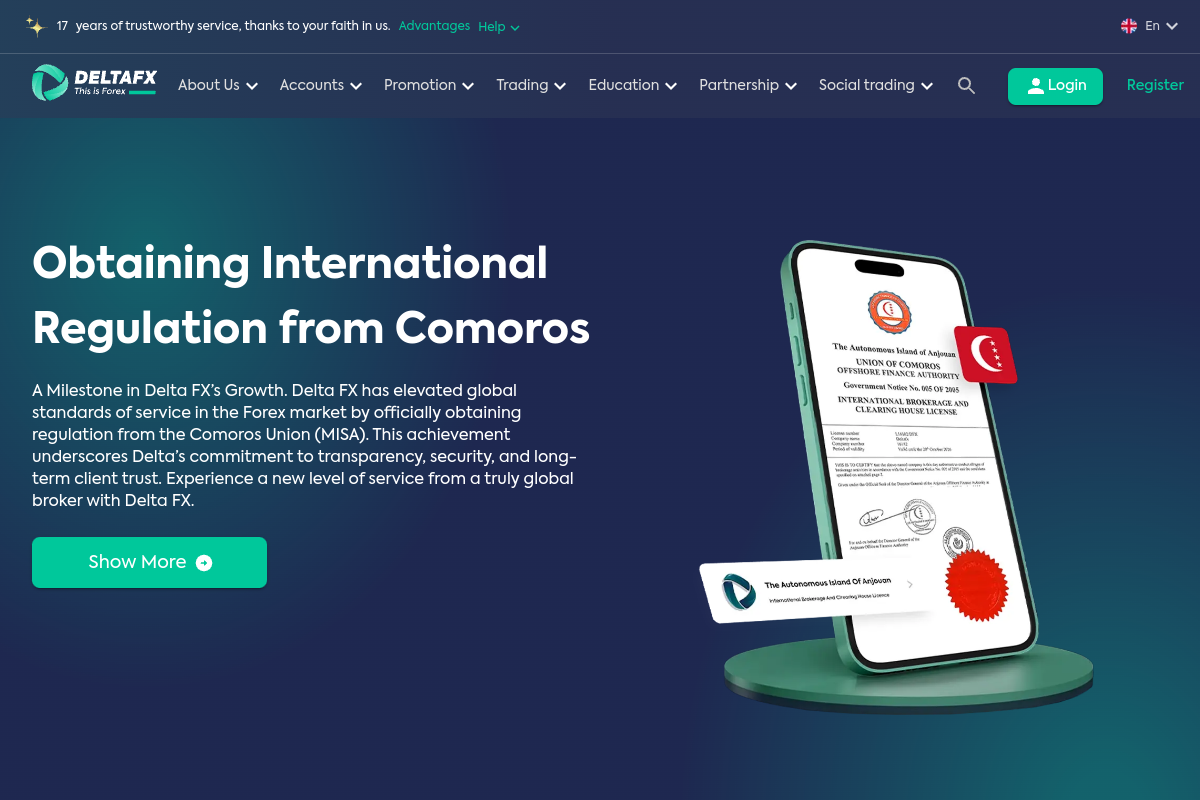
Upon investigating Deltafx, there is a notable absence of licensing information from tier-one regulators. While the platform may claim to be registered in offshore jurisdictions such as St. Vincent and the Grenadines, it is crucial to understand that these regions offer very little to no oversight for forex brokers. Registration in an offshore tax haven is a common tactic used by fraudulent entities to bypass the rigorous audits required by major financial centers. Without tier-one regulation, investors have no legal recourse if the platform decides to withhold funds or manipulate trading data. This lack of transparency is a significant red flag that immediately shifts the classification of Deltafx toward the high-risk category.
Red Flags Analysis: Technical and Operational Indicators
A professional cyber-security analysis involves looking at the technical “fingerprints” of a website. When we examine the infrastructure of Deltafx, several technical red flags emerge that are typical of scam operations. These indicators are often overlooked by the average user but are glaring signals to an expert.
- Opaque Ownership and Contact Information: Legitimate financial institutions provide clear details about their corporate structure, including the names of the executive team and a verifiable physical address. Deltafx lacks a transparent “About Us” section. The contact information provided is often limited to a generic email address or a web-based contact form, making it nearly impossible for users to track down the individuals behind the operation if a dispute arises.
- High-Pressure Sales Tactics: Many users have reported being contacted by “account managers” from Deltafx who use aggressive psychological pressure. These individuals often encourage users to deposit more money to take advantage of a “limited-time opportunity” or to “recover” losses from previous trades. In the cyber-security world, this is a hallmark of a recovery scam or a “pig butchering” scheme.
- Inconsistent SSL and Security Protocols: While the site may employ basic SSL encryption, which protects data in transit, the quality of the certificate and the server’s history are telling. Frequent changes in domain names or the use of cheap, short-term hosting services are common among platforms that expect to be taken down by authorities or flagged by blacklists within a few months.
- Suspicious Pricing and Bonus Schemes: Deltafx often offers “deposit bonuses” that seem overly generous. In a regulated environment, these bonuses are often banned or strictly controlled because they come with hidden terms and conditions. These conditions usually require the trader to reach an impossible volume of trades before they are allowed to withdraw any of their own deposited capital.
The User Experience and Withdrawal Issues
The true test of a broker’s integrity occurs when a user attempts to withdraw their profits. A legit platform processes withdrawals within a reasonable timeframe, typically three to five business days, after standard identity verification. In the case of Deltafx, user feedback across various independent review platforms tells a very different story. A consistent pattern has emerged where users find it easy to deposit money but nearly impossible to get it back.
Common complaints regarding the Deltafx withdrawal process include the sudden requirement for “tax payments” or “insurance fees” that must be paid upfront before a withdrawal can be processed. This is a classic scam tactic. A legitimate broker will always deduct any applicable fees from the existing balance of the account rather than asking for a new payment. Furthermore, accounts are frequently frozen or locked without explanation once a withdrawal request is initiated, citing “suspicious activity” or “technical glitches” that are never resolved.
Cyber-Security Perspective on Deltafx Infrastructure
From a technical standpoint, the website design of Deltafx often utilizes generic templates that can be purchased for a low cost. These “broker-in-a-box” solutions allow scammers to launch professional-looking websites in a matter of hours. When conducting a Whois lookup on the domain, we often see that the registration details are hidden behind privacy shields. While privacy is a right for individuals, a financial institution should be transparent about its domain ownership to build trust with its clientele.
Additionally, the absence of two-factor authentication (2FA) or robust account security measures is a major concern. If a platform does not prioritize the security of its users’ login credentials, it suggests that the platform itself is not built for long-term stability but rather for short-term data and fund harvesting. The lack of detailed documentation regarding their liquidity providers also suggests that the trades shown on the platform’s dashboard may not actually be occurring on the real market but are instead part of a closed-loop simulation designed to deceive the user.
User Reviews Summary and Sentiment Analysis
To provide a balanced view, we analyzed sentiment across forums like Trustpilot, Forex Peace Army, and various social media groups dedicated to scam alerts. The consensus is overwhelmingly negative. While there are a handful of five-star reviews, these often exhibit the characteristics of fake or paid reviews: they are short, use repetitive language, and are posted by accounts with no previous history. These “shill” reviews are used to artificially inflate the platform’s rating and drown out the voices of genuine victims.
The genuine reviews are detailed and harrowing. They describe individuals losing their life savings and being ignored by support teams as soon as they stop depositing funds. The emotional and financial toll described by these users is a stark reminder of the dangers posed by unregulated offshore brokers. The recurring theme is one of initial success—often facilitated by “luck” or “guided trades” from a manager—followed by total account loss or the inability to access funds once the balance grows.
Final Verdict: Is Deltafx a Scam or Legit?
After a thorough investigation involving regulatory checks, technical analysis, and user sentiment evaluation, the verdict is clear. Deltafx displays all the classic hallmarks of a high-risk, fraudulent trading platform. The combination of offshore registration, lack of tier-one regulation, aggressive sales tactics, and systematic withdrawal issues makes it impossible to classify this platform as legitimate.
Investors are strongly advised to avoid Deltafx. The risk of total capital loss is extremely high. When choosing a forex broker, always prioritize platforms that are transparent about their licensing, provide verifiable physical addresses, and have a long-standing reputation for processing withdrawals without delay. Protecting your financial future starts with due diligence and a healthy dose of skepticism toward any platform that promises easy wealth through offshore trading.
In summary, Deltafx is a dangerous entity that operates in the shadows of the financial world. If you have already deposited funds with this platform, it is recommended that you cease all communications with their representatives and contact your bank or local financial fraud authorities to explore possible recovery options. Do not pay any additional fees for “taxes” or “clearance,” as this will only result in further losses. Stay vigilant, trade only on regulated exchanges, and always verify the credentials of any financial platform before committing your hard-earned money.
Leave a Reply